What a yes/no tarot reading is
A yes/no tarot reading is exactly what it sounds like — a tarot reading with a single answer, arrived at by drawing one card (or occasionally three) and interpreting it as a clear yes, a clear no, or a nuanced maybe. It is the simplest tarot method that exists, and for many practitioners it is also the most consistently useful. When the mind is spinning in circles and the heart already knows what it needs to hear, a single-card yes/no reading cuts through the noise faster than any other kind of tarot work. Part of our tarot reference library. Part of our tarot reference library.
The technique is ancient. Divinatory yes/no methods predate the tarot itself by thousands of years — the oldest known form is the casting of bones, practiced across cultures from Africa to East Asia to the Americas. The idea is always the same: use a physical object with clear binary states (fell face-up or face-down, landed inside the circle or outside, produced an odd or even count) to short-circuit the endless mental loop and receive a decision from outside your own overthinking. (part of our tarot reference) Part of our tarot reference library. See our related guide on free love tarot what is he thinking. See our related guide on free psychic chat. Try our 3 Card Tarot Spread guide.
In tarot, the yes/no method took shape as the deck itself did — most likely in 15th-century Italy, refined through the French esoteric revival of the 18th and 19th centuries, and popularised in its modern form during the tarot revival of the 1970s and 1980s. Today, yes/no readings are the entry point most people use to first meet the cards. The full 78-card deck has more depth than any beginner needs on their first day; a single card asking a clear question is a doorway that anyone can walk through. Part of our tarot reference library. Part of our tarot reading guide library. Try our Career Tarot Spread guide. Try our Celtic Cross Tarot Spread guide. Try our Decision Tarot Spread guide. Try our Horseshoe Tarot Spread guide.
What makes a good yes/no reading is not the method itself. It is the quality of the question. A vague question produces a vague answer no matter how you shuffle. A specific, honest question produces a clear answer even from the simplest single-card draw. Most of this guide is about how to ask well. Try our Love Tarot Spread guide. Try our One Card Tarot Pull guide. Try our Pentagram Tarot Spread guide. Try our Relationship Tarot Spread guide. Try our Shadow Work Tarot Spread guide. Try our Situation Action Outcome Spread guide. Try our Tarot Spread For Anxiety guide. Try our Tarot Spread For Beginners guide.
When yes/no readings actually work
Yes/no tarot works best when three conditions are true.
Condition 1: The question has an answer that would help you. Some questions are worth asking because the answer changes what you do next. "Should I take this job?" is a real yes/no question. "Will my ex text me back?" is entertainment. Reserve yes/no readings for the first kind. See how Raka compares to other apps in our independent guide. Try our Tarot Spread For Clarity guide. Try our Tarot Spread For Grief guide. Try our Tarot Spread For Manifestation guide. Try our Tarot Spread For Self Love guide. Try our Yes No Tarot Spread guide.
Condition 2: The question is about you and your choices. Tarot reads energy and pattern. It cannot honestly predict what another free-willed human will do. A yes/no reading about your decision, your timing, your readiness is meaningful. A yes/no reading about someone else's behaviour is projection dressed up in cards.
Condition 3: You are willing to receive both possible answers. If you are only asking so the cards can confirm what you have already decided, the reading will not help you. It will either confirm you (in which case you didn't need to ask) or contradict you (in which case you will dismiss it). Ask only when you would genuinely change your action based on either answer.
When all three conditions are true, yes/no readings are extraordinarily useful. They cut through analysis paralysis. They surface the intuitive answer your rational mind has been suppressing. They make a decision possible where before there was only spinning. The technique is simple; the skill is in choosing the right moment to use it.
Three reliable yes/no methods
Different tarot lineages use different methods for reading a single card as yes or no. Three approaches have been refined enough over enough decades to be considered reliable across most readers. Each has its own logic and its own strengths. Choose the one that resonates and use it consistently — mixing methods within a single reading produces confusion rather than clarity.
Method 1: Upright and reversed
The simplest method. Draw a card. If it lands upright, the answer is yes. If it lands reversed (upside down), the answer is no. That's the entire technique.
The strength of this method is its speed and its irreducibility. There is no interpretation. There is no ambiguity. The card is either upright or reversed, and the answer is either yes or no. When you need a decision fast and cannot afford to negotiate with the cards, this is the method to use.
The weakness is that it depends on your shuffle. If you always keep your deck oriented the same way, most cards will always come out upright, and you will get a lot of false yeses. The method requires shuffling with random orientation — deliberately rotating cards throughout the shuffle so that any card has an equal chance of landing either way. Many readers use a bridge shuffle followed by a rotation of the whole deck to guarantee true randomness.
This method is best for: quick daily questions, decisions where speed matters, moments when you are already leaning one way and need a tiebreaker.
Method 2: Elemental (suits + majors)
A more nuanced method that reads yes/no through the elemental correspondence of the suits.
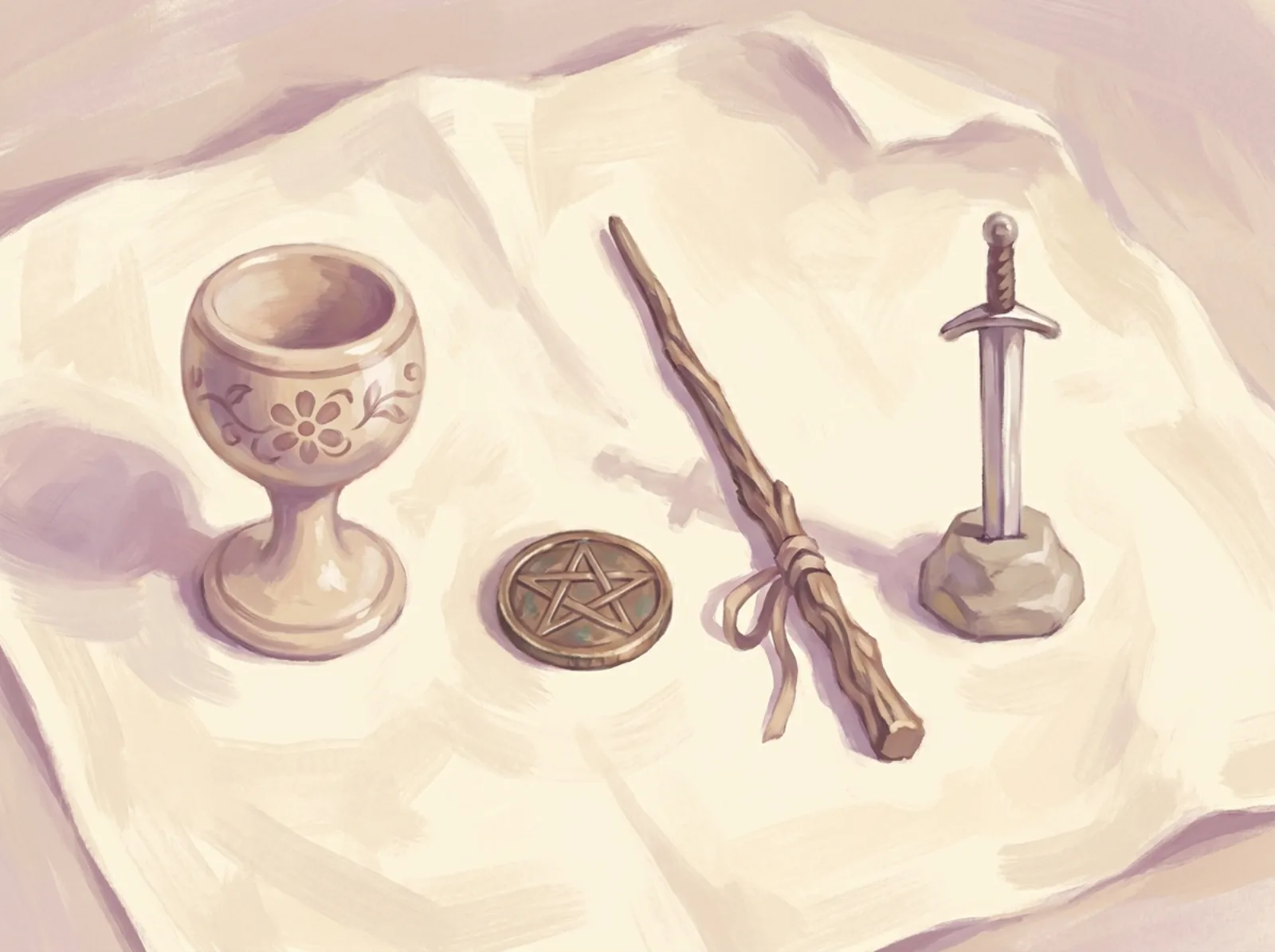
The rule: Fire (Wands) and Air (Swords) = yes. Water (Cups) and Earth (Pentacles) = no. Major Arcana = maybe or contextual. This is because fire and air are considered active, initiating elements — they push forward. Water and earth are receptive, holding elements — they invite pause.
The strength of this method is its texture. The card you draw not only gives you an answer but also tells you why. A yes answered by the Three of Wands (fire) has different energy from a yes answered by the Ace of Swords (air). A no answered by the Nine of Cups (water) has different energy from a no answered by the Five of Pentacles (earth). Once you have your answer, you can spend a moment with the specific card to understand the shape of the answer. Try best numerology app to explore this in more depth.
The weakness is that it depends on you knowing the suits. If you are brand-new to tarot, you will not immediately recognise a Cup from a Sword, and the method will feel opaque. Once you have learned the four suits (a week's practice), the method becomes intuitive.
This method is best for: readers with some tarot familiarity, questions where the answer matters less than the reason, moments when you want to understand not just what to do but why.
Method 3: Three-card majority
The most robust method for high-stakes questions. Draw three cards. Count how many are upright and how many are reversed. If two or three are upright, the answer is yes. If two or three are reversed, the answer is no. A tie is not possible with three cards, but the strength of the answer varies — three of one is a strong answer; two-to-one is a soft answer with real reservations.
The strength of this method is its stability. A single card can be misleading — you shuffled poorly, you drew from a bad angle, you interpreted a borderline orientation. Three cards average out the noise. You get a more reliable read.
The additional depth: after counting, look at the three cards together. What story do they tell? If your answer is yes but the cards suggest challenge, that is useful information. If your answer is no but the cards suggest release, that is also useful. The majority tells you what to do; the three cards together tell you what to expect.
This method is best for: significant decisions, questions you have been circling for weeks, moments when you need not just an answer but the fuller context of the answer.
How to ask a good yes/no question??????
The question is 90 percent of the reading. A clear question produces a clear answer even from a beginner. A vague question produces mush even from an experienced reader. Here is how to ask well.

Make the question binary. "Should I take the job?" is binary. "What is happening with my career?" is not — it invites a long conversation, not a yes/no. If you cannot phrase the question as something answerable with a yes or a no, the yes/no method is the wrong tool for it.
Make the question about you. "Should I text him?" is about you. "Will he text me?" is not — it depends on someone else's free will, which the cards cannot honestly predict. If you find yourself asking about another person's behaviour, reframe the question to be about your own action.
Make the question specific. "Should I move to Berlin this year?" is specific. "Should I move somewhere?" is not. The more precise the question, the more precise the answer.
Make the question one you would act on. Ask only questions where the answer would change what you do tomorrow. If nothing you do would change based on the answer, you are not asking for guidance; you are asking for entertainment. Save the reading for questions that matter.
Make the question honest. Do not phrase it in a way that primes the answer you want. "Should I stay with my toxic partner who lies to me constantly?" is a leading question. "Is this relationship serving my long-term wellbeing?" is honest. The card can only answer the question you actually asked.
Examples of well-formed yes/no questions:
- Should I accept the job offer at Company X?
- Is now a good time to end this relationship?
- Should I book the flight to visit my father?
- Is this friendship worth continuing to invest in?
- Should I sign the contract by Friday?
- Would starting therapy help me now?
- Should I have the difficult conversation with my sister today?
Questions never to ask yes/no
Some questions the cards genuinely cannot answer well. Asking them yields answers that mislead you.
1. Life-or-death questions. "Will I die soon?" "Is my family member going to survive?" The cards do not predict mortality reliably, and no responsible reader tries. Consult a doctor.
2. Questions about another person's free will. "Will he propose?" "Will she cheat?" The cards read energy and pattern, not the future behaviour of specific humans. The person you are asking about may change their mind five minutes after you draw the card.
3. Legal or medical questions. "Should I take this medication?" "Will I win the lawsuit?" Consult a professional. The cards are for self-reflection, not diagnosis or legal advice.
4. Questions asked to spy on someone. Any question that is really about surveilling another person's actions is a boundary violation dressed up in tarot. Do not use the cards this way.
5. Questions asked in extreme emotional states. The cards mirror the state of the reader. If you are in acute distress, the reading will confirm the distress. Wait until you can approach the question with some calm.
6. The same question asked repeatedly. Ask a question. Get an answer. Sit with it. If the answer displeased you and you re-shuffle to try to get a different one, you are not doing a reading — you are gambling. The cards will begin to give you contradictory answers until you stop.
Yes/no meanings for all 22 major arcana
The Major Arcana are the archetypal cards, and their yes/no interpretations tend to be softer than the minors — they answer more with texture than with straight verdict. Here is the consensus reading across most traditions:
The Fool — Yes, but with the caveat that you are entering unknown territory. Take the leap.
The Magician — Yes. You have everything you need to make this work.
The High Priestess — Maybe. Trust intuition, not logic. The answer is felt, not thought.
The Empress — Yes. Especially yes for anything creative, nurturing, or growth-related.
The Emperor — Yes. Especially yes for anything requiring structure or authority.
The Hierophant — Yes, if it aligns with tradition or established structure. Otherwise, no.
The Lovers — Yes. Especially in relationship questions.
The Chariot — Yes. Move forward. The direction is right.
Strength — Yes. You have the inner resources this requires.
The Hermit — No. Or: yes but not yet. Retreat first; act later.
Wheel of Fortune — Yes if the timing feels right; no if it feels forced.
Justice — Yes if the choice is ethically clear. Otherwise reconsider.
The Hanged Man — No. Or: wait. The perspective you need has not arrived.
Death — Yes, but something has to end for the yes to arrive. Are you willing?
Temperance — Yes. Balance the yes with patience.
The Devil — No. Especially if the yes would be about pleasure over long-term wellbeing.
The Tower — Yes, but the yes will bring disruption. Are you ready?
The Star — Yes. Especially for anything involving hope or long-term vision.
The Moon — Maybe. Uncertainty is high. Do not commit yet.
The Sun — Yes. Enthusiastically yes.
Judgement — Yes. This is a call worth answering.
The World — Yes. The moment is complete.
Yes/no meanings for the minor suits
The minor arcana are easier to read yes/no because their elemental affiliation is fixed. Here is the general approach.
Wands (Fire) — Yes. Every wand card is fundamentally a yes for questions of action, movement, courage, and starting things. The specific card colours the yes (Ace = fresh yes, Ten = yes but heavy). But the direction is forward.
Cups (Water) — No or maybe. Cups are the suit of feeling and receptivity. They are usually a no for questions of action, but a yes for questions of feeling. "Should I take this action?" — cups often say no. "Am I ready to receive this?" — cups often say yes.
Swords (Air) — Yes, but often with challenge. Swords are the suit of thought and decision. They say yes to action but warn that the action may involve difficulty. The Ace of Swords is a clear yes; the Ten of Swords is a warning-flagged yes.
Pentacles (Earth) — No or slow yes. Pentacles are the suit of material reality and patience. They say no to fast action and yes to slow building. "Should I do this now?" — pentacles often say wait. "Should I commit to this over the long term?" — pentacles often say yes.
Read the specific card for texture, but the suit itself gives you 80 percent of the answer.
When the answer is 'maybe' — how to read it
Some cards produce genuinely ambiguous answers — the Hierophant, the High Priestess, the Moon, the Wheel of Fortune, and many of the mid-range minor arcana. When you draw a maybe card, do not force it into a yes or a no. The maybe itself is the message.
A maybe usually means one of three things:
1. You do not have enough information yet. The question is real but the timing is early. Wait, gather more, ask again in a few weeks.
2. The question is malformed. The maybe often reveals that you are asking the wrong question. Re-examine what you are actually trying to figure out. Ask the more specific version of the question.
3. Both yes and no are true simultaneously. Sometimes the honest answer is that the situation contains both. Take the action but expect challenge. Say yes to the connection but no to living together. The maybe is honouring the complexity.
The temptation is to re-shuffle until you get a clearer answer. Resist it. The maybe is the answer. Sit with it. The clarity often arrives in the days following, not in the moment of the draw.
Should you ask the same question again?
No. Or almost never. The tarot tradition across most lineages agrees on this: ask a question once. Sit with the answer. Do not immediately re-shuffle to get a different answer.
The reason is straightforward. If you got the answer you wanted, you have no reason to ask again. If you got the answer you did not want, asking again is not seeking clarity — it is negotiating with the cards until they tell you what you want. The cards will oblige, and the reading will lose meaning. Try best natal chart app to explore this in more depth.
The exception is significant new information. If a week later you know something material that changes the shape of the question, you can ask again — but frame the new question with the new information. "Given that X happened, is Y still the right move?" That is a different question, not the same one.
If you keep wanting to ask the same question, that is itself information. Something inside you is not accepting the first answer. The next-level work is not another card draw — it is asking what you are not accepting, and why.
Common misconceptions about yes/no readings
Myth 1: Yes/no readings are shallower than complex spreads. Not necessarily. A well-asked yes/no can be more useful than a poorly-asked ten-card spread. Depth is in the question, not the number of cards.
Myth 2: The cards predict what will happen. No. They read the current energy and mirror back what your unconscious already knows. Predictions of external events are always tentative. Try zodiac compatibility to explore this in more depth.
Myth 3: If I get a no, I should force the yes anyway. The no is information. Overriding it is fine — many people do — but do not blame the cards later when the difficulty they warned about arrives.
Myth 4: Beginners can't do yes/no readings well. Yes/no is arguably the best method for beginners. Simplicity forces clarity. Advanced spreads require more skill; yes/no requires only a good question.
Myth 5: You need a special deck. No. Any tarot deck works. Rider-Waite-Smith is the easiest to learn on because most yes/no interpretive guides are written for it, but any deck you love will work. Try the Raka app to explore this in more depth.
What is the history of yes/no divination across traditions??????
The instinct to consult an external oracle for a binary answer is one of the oldest impulses in human religious and spiritual life. Long before tarot cards existed, humans across every continent were casting bones, throwing shells, spinning coins, and reading the flight patterns of birds. Understanding this longer history helps you approach a modern yes/no tarot reading with the seriousness the tradition deserves.
African bone divination is among the oldest documented yes/no systems. Practitioners across the Zulu, Xhosa, Sangoma, and other traditions cast a set of bones onto a mat. The pattern of the casting produced yes/no answers to specific questions. The system is still practiced today across southern Africa and diaspora communities globally, and modern anthropologists have documented cases where the guidance produced through bone casting materially shaped major life decisions in ways that appeared to serve the querent well over time.
Chinese I Ching is the Book of Changes, one of the oldest continuously-consulted divinatory texts in the world, composed roughly 3,000 years ago. It uses coin tosses or yarrow-stalk casting to produce hexagrams. The underlying method is binary at its core; each hexagram is built from broken and unbroken lines generated by a series of small yes/no oracular events. Confucius wrote extensively about it. Carl Jung took it seriously enough to write a foreword to the standard English translation. It has remained continuously in use across three millennia despite dramatic changes in Chinese religious life.
Vedic Nadi astrology and prashna kundali in India developed sophisticated yes/no systems specifically for prashna (question) charts. A skilled Vedic astrologer casting a prashna would read planetary positions at the moment of the question to give a clear yes, no, or timed answer. The prashna tradition treats the moment of asking as itself oracular. The question chooses when to arise, and the state of the heavens at that moment is the answer.
Roman augury employed haruspicy (reading animal entrails) and augury (reading bird flight) for yes/no answers to matters of state. The systems were rigorous enough that Roman generals genuinely delayed battles based on the answers received. The public expenditure on augural infrastructure across the Roman world suggests that either the elite genuinely believed the system worked or that it served a valuable psychological function of arresting hasty decisions.
Norse rune casting used the ancient runic alphabet as an oracular tool. The Elder Futhark runes cast onto a cloth produced yes/no readings among the northern peoples of Europe. Modern practitioners continue this practice, and the sagas record numerous examples of rune-cast answers materially shaping decisions of trade, marriage, and warfare among Norse communities.
Christian bibliomancy is the practice of asking a question, opening the Bible at random, and reading the first passage that catches the eye. It served as a Christian variant of the same instinct. Augustine famously converted after opening Romans at random and reading a passage that spoke to his exact spiritual crisis. Bibliomancy is still practiced quietly by many contemporary Christians who would not necessarily call the practice divination.
What all these traditions share is a recognition that human beings need a way to step outside their own spinning minds and receive a decision from a source that is not their own conscious deliberation. Yes/no tarot in the 21st century is the newest expression of that ancient need. Approach it with the seriousness the tradition earned across three thousand years of careful use.
Why yes/no divination actually works??????
The rigorous question is: why would yes/no tarot actually produce useful answers? The tarot cards do not have oracular power inherently; they are printed cardstock. The physical act of shuffling is random or nearly so. On the surface, the whole system should be equivalent to flipping a coin.
The traditional answers fall into three broad camps.
The metaphysical answer. Traditional practitioners hold that when you approach the cards with a sincere question, a source beyond your conscious mind influences which card surfaces. Call it your guides, your higher self, the collective unconscious, God, the ancestors. The cards themselves are not oracular, but the moment of drawing is a moment of contact with something intelligent and benevolent. This view is metaphysically substantial and cannot be falsified by empirical means. Practitioners who hold it consistently report readings meaningfully accurate over long periods of practice.
The psychological answer. The great Swiss psychoanalyst Carl Jung took divination seriously enough to write a foreword to the standard English translation of the I Ching. His view: the meaningful coincidence of drawing a particular card at a particular moment is synchronicity, an acausal connecting principle by which the outer world reflects and manifests the state of the inner world. From this perspective, the card that surfaces is meaningful because it captures the psychological state of the querent in that specific moment. The card is a mirror; the mirror shows you what you did not previously see. The unconscious knows things the conscious mind does not, and the card gives the unconscious a voice.
The practical answer. Even setting aside metaphysics and depth psychology, yes/no tarot works because it forces you to formalise a question, engage a symbolic system, and interpret an answer. The process itself — question, shuffle, draw, interpret, sit with the result — is a structured decision-making practice that produces better decisions than pure conscious deliberation, regardless of what one believes about the oracular source. The rigour of the practice, more than the metaphysics behind it, is often what makes the difference.
You do not need to commit to any of the three answers to benefit from yes/no readings. What matters is that the practice, sincerely done, consistently produces useful results for a wide range of practitioners across a wide range of worldviews. Approach the cards with respect and honesty, ask well, sit with the answer, and the method will serve you regardless of your metaphysics.
Yes/no tarot in the digital age — apps and AI
In 2026, yes/no tarot has moved onto phones. The traditional shuffle-and-draw practice is now paralleled by dozens of apps that will draw a card for you at the tap of a button. This raises real questions about whether digital yes/no readings carry the same weight as physical ones. The honest answer is: it depends.
The case against digital. Some traditional practitioners hold that the physical shuffle is what allows the intention of the querent to influence which card surfaces. In this view, a random-number generator selecting a card from a database is a fundamentally different kind of event; the querent's presence is not part of the selection. There is real substance to this concern. When you shuffle a physical deck, your body, your breath, your emotional state all participate in the moment of the shuffle. Which card sits at the top of the shuffled deck is a function of hundreds of subtle physical choices you made in the shuffling.
The case for digital. Other practitioners hold that the intention and attention of the querent is what matters, regardless of the physical medium. A digital shuffle animation is functionally equivalent to a physical shuffle if the querent is genuinely present to the question in both cases. The medium is less important than the presence.
The pragmatic middle ground. Use digital yes/no readings for convenience and casual daily questions. Use physical readings for significant questions where you can slow down, be fully present, and allow the ritual of the shuffle to focus your attention. Both work; each has its place. Practitioners who use both find they serve different functions — the digital reading is often the daily practice; the physical reading is the deeper working reserved for questions that matter more.
The specific case for a well-designed AI tarot app is that it can layer AI interpretation on top of the yes/no answer, turning a single-card draw into a genuine conversation about the question. Apps like Raka include not just the card but also a contextual interpretation grounded in the specific question you asked, personalising the reading in ways that would be difficult even with an experienced human reader available on demand. This is a real capability the digital medium enables that physical tarot cannot match. Read our comparison of AI astrology and tarot apps for more on which apps do this well.
Sample yes/no readings — common life questions
The best way to develop a feel for yes/no readings is to walk through examples. Here are six common questions with sample cards and honest interpretations that show how the method plays out in practice.
Question 1: Should I take the promotion? Cards drawn (elemental method): Nine of Cups (water). The answer is technically no by the elemental rule, cups are the pause suit. But the specific card matters. Nine of Cups is often called the wish card, the moment of getting what you asked for. In context, this card is saying: the promotion is what you have been wishing for, but the water quality is asking whether you are ready to receive it, whether it is genuinely aligned with your emotional life. The nuanced reading: yes, but slow down. Take the promotion, but not without consciously asking whether it will nourish you or trap you.
Question 2: Is this friendship worth continuing to invest in? Cards drawn (three-card majority): Two of Cups upright, Six of Pentacles upright, Five of Swords reversed. Two upright, one reversed. The majority says yes. The specific cards fill in the picture: Two of Cups is the classic friendship card in its balanced expression, the connection is real. Six of Pentacles suggests generosity and mutual support are present. Five of Swords reversed says a previous conflict is releasing rather than escalating. The integrated reading: yes, the friendship is worth continuing; a difficult period is passing; the reciprocity is real.
Question 3: Should I book the flight to visit my father? Card drawn (upright/reversed method): The Star, upright. Clear yes. The Star is one of the most benevolent cards in the deck: hope, healing, connection restored. The card is not just saying yes; it is saying that the visit will restore something. Book the flight.
Question 4: Should I message the ex I have been thinking about? Card drawn (elemental method): Seven of Swords (air). Technically yes by the elemental rule, swords are action. But Seven of Swords is the card of deception, of moves made in shadow, of taking what is not fully yours. The specific card is important here; it is warning that the messaging would be a form of self-deception. The honest reading: yes, you can message, but the card is asking you to be truthful about your motive. If the message is to genuinely reconnect, that is one thing; if it is to reopen something you know is closed, the card is saying you already know it is not straight. Sit with what your motive actually is before you send anything.
Question 5: Should I invest in this side business idea? Cards drawn: Ace of Pentacles upright, Eight of Pentacles upright, Ten of Wands reversed. Two upright, one reversed. Yes. The specific cards: Ace of Pentacles is the classic new-financial-venture card, the seed is real. Eight of Pentacles points to the discipline required for the venture to grow. Ten of Wands reversed suggests you are ready to release a heavier commitment to make room for this new one. The integrated reading: yes, the investment is aligned; the venture has real seed energy; you will need discipline to grow it; you are actually ready to make room for it in your life.
Question 6: Should I sign up for the meditation retreat? Card drawn (upright/reversed method): The Hermit, upright. Yes, but with texture. The Hermit is the classic card of retreat, solitude, inward journey, a perfect match for the question. The upright orientation confirms the readiness. Sign up.
The pattern across these examples: the card gives you the answer, and the specific card gives you the texture of the answer. Reading yes/no tarot well means honouring both.
The ethics of yes/no tarot readings
Tarot practice, done well, carries ethical weight. The ethics of yes/no readings specifically deserve their own treatment because the format's simplicity can mask complex responsibility.
Ethics of self-reading. When you read the cards for yourself, you are the only person affected. The ethics are largely internal: are you asking honestly? Are you willing to accept both possible answers? Are you using the practice as reflection rather than avoidance? If yes, the practice is ethically sound.
Ethics of reading for others. This is more complicated. When you read yes/no cards on behalf of a friend, family member, or client, you are effectively giving advice on their major decisions. The ethical standard is high: only read for someone who explicitly asked you to; never read for someone in your absence without their consent; do not project your own preferences onto the reading; make clear that the reading is one input among many, not a fated pronouncement. Try free numerology calculator to explore this in more depth.
Ethics of reading about a third party. When someone asks you to read about another person's behaviour or intentions ("is he cheating?" "will she leave her husband?"), the ethical answer is usually to decline. You are being asked to psychically surveil someone who has not consented. Reframe the question to be about the querent's own path.
Ethics of payment. If you charge for readings, be transparent about your rates and about the limits of what you offer. Do not manufacture urgency ("only I can lift this curse"). Do not upsell beyond what serves the client. Do not read on questions clearly better served by professional therapy or medical care; refer out.
Ethics of prediction. Even for yourself, be careful about how much predictive weight you place on any single reading. The cards read energy and pattern, not certain futures. Present readings — including your own to yourself — with appropriate humility. "This is what the cards suggest" rather than "this is what will happen."
The tarot tradition has always held that the tools carry the ethics of the reader who wields them. The cards themselves are neutral. What you do with them determines whether the practice serves you and others or harms them. Yes/no readings, because they produce such quick clear answers, require particular care.
Common beginner mistakes with yes/no readings
Beginners tend to make predictable mistakes when learning yes/no tarot. Naming them in advance saves years of practice from calcifying into bad habits.
Mistake 1: Asking too many questions in one session. The temptation is to shuffle, draw, get an answer, immediately ask another question, draw again, ask another. The result is a spinning mind that has extracted no wisdom from any of the readings. The discipline is to ask one question per session, sit with the answer for at least a day, and only return to the deck when new information warrants a new question.
Mistake 2: Reading the same question with multiple methods until you get the answer you want. Draw a card with the upright/reversed method, get no, try the elemental method hoping for yes. This is negotiating with the deck. It hollows out the practice. Pick one method for the question; use it once; accept the answer.
Mistake 3: Interpreting every card with maximum drama. The Devil in a yes/no reading is not necessarily a message of doom; it may simply be a soft no about the specific question. The Tower is not always cataclysm; sometimes it is a warning-flagged yes. Beginners tend to read every card as if its most extreme traditional meaning is fully activated. Practice teaches the softer, contextualised reading.
Mistake 4: Ignoring your gut when it disagrees with the card. If the card says yes but your body says no, the disagreement is information. The card and the gut are both reading the same field; when they disagree, the reading is more nuanced than the card alone suggests. Sit with the disagreement rather than choosing one side.
Mistake 5: Doing yes/no readings when you are upset. The cards mirror the reader's state. Readings done in high emotional arousal tend to reflect the arousal rather than the underlying situation. Wait until you can approach the question with reasonable equanimity.
Mistake 6: Treating the cards as an authority you must obey. The cards are a tool for reflection. The decision remains yours. If a card says yes and you know in your bones that you should say no, say no. The card does not override your own knowing; it complements it.
The lasting value of a good yes/no reading
The best defence of yes/no tarot as a practice is not that the cards predict the future. They do not, reliably. The best defence is that a well-asked yes/no reading, done with sincerity, consistently produces clarity that would take hours of thinking to arrive at through pure conscious deliberation. The practice compresses the decision-making process. It surfaces what you already know but had not made conscious. It gives you a mirror in which the situation reveals itself faster than the mind can spin.
Over months and years of practice, most sincere readers report a specific development: their yes/no readings begin to align more and more consistently with what turns out to be the right choice. Not always. Not perfectly. But at a rate that outperforms coin-flipping by enough to be noticed. Whether this is because the cards have oracular power, because synchronicity is real, or because the discipline of the practice is producing better decision-making, the result is the same. The practice works.
If you are new to tarot, yes/no readings are the best doorway. Simple format, immediate feedback, low investment. Ask a question; draw a card; interpret it; live with the answer for a week; notice whether it turned out to be useful. Repeat weekly for a few months and you will develop a personal relationship with the deck that no amount of reading books about tarot can produce. The cards teach through direct engagement, not through theory. Start today.
Choosing the right deck for yes/no readings
Any 78-card tarot deck can be used for yes/no readings. But some decks lend themselves to the practice better than others. Understanding what to look for helps you build a working library.
Rider-Waite-Smith and its clones. The Rider-Waite-Smith deck (published 1910, illustrated by Pamela Colman Smith) is the standard reference deck for modern English-language tarot. Every interpretive book, app, and course is written assuming you have this deck. For a beginner doing yes/no readings, this is the correct first deck. The imagery is scenic on every card, which makes intuitive reading easier. Modern clones and reprints are inexpensive and widely available.
Marseille tradition decks. The Tarot de Marseille lineage predates Rider-Waite by several centuries and uses pip cards (numbered cards with only suit symbols, not scenes) for the minor arcana. Advanced readers often prefer Marseille decks for their historical depth. For yes/no readings specifically, Marseille decks force you to know your card meanings from memory rather than relying on scenic imagery. This is more demanding but produces deeper practice.
Thoth tradition decks. The Thoth deck (illustrated by Frieda Harris under Aleister Crowley's direction) is the reference deck of the Golden Dawn esoteric tradition. Rich, complex, esoterically dense. For yes/no readings, the Thoth adds astrological and Kabbalistic layers that some readers find enriching and others find distracting. Use if you are drawn to the tradition.
Modern independent decks. Hundreds of contemporary tarot decks have been published in the past decade, ranging from stunning artistic works to gimmicky knock-offs. If a deck's imagery genuinely resonates with you, it will produce more accurate readings than a deck you feel neutral about. The relationship between reader and deck matters. Choose what you love.
The rule: have at least one Rider-Waite-Smith deck for reference and study. Beyond that, follow your love. A deck you actually want to spend time with is worth more than a deck you feel obliged to use.
Building a daily yes/no practice
The single yes/no reading, done well, is powerful. A daily practice of yes/no readings is transformative over months.

The morning card. Each morning, shuffle your deck, ask a single yes/no question about the day ahead ("is today a day for pushing forward?" "should I have that difficult conversation today?" "is my energy right for the meeting this afternoon?"), draw one card, interpret it, and go. The whole practice takes three minutes.
The evening review. Before bed, look back at the morning card. Was the answer accurate? What did the card reveal that you would not otherwise have noticed? The evening review is what turns the practice from divination into learning.
The weekly deep read. Once a week, use the three-card majority method for a more significant question. This is the more considered practice, done at a slower pace, often on a specific weekday you set aside.
The monthly review. At month's end, review the month's readings. Which turned out to be prescient? Which missed? What patterns did the deck consistently name? The monthly review compounds insight across time.
Practitioners who maintain this rhythm for a year report significant shifts: their decisions become clearer, their intuition sharpens, their relationship with the deck deepens into something that feels genuinely alive. The daily practice is where the tradition earns its longevity.
The final word on yes/no tarot
Across three thousand years of divinatory practice, human beings have found that a simple binary question, put to a system beyond the conscious mind, consistently produces useful answers. The tarot is the most refined form of that practice available to English-speaking readers today. Yes/no readings are the entry point most beginners use to first meet the cards, and they remain — even for experienced readers — one of the most practical daily uses of the tradition.
The value is not in the prediction. The tarot is not a fortune-teller in the crude sense of predicting external events. The value is in the mirror — the way a well-drawn card, held with sincere attention, reveals the truth of a situation faster and more clearly than the spinning mind could arrive at on its own. The card is a doorway into what you already know but had not made conscious.
If you take one thing from this guide, take this: ask well, receive honestly, act on what you learn. The question is 90 percent of the practice. The interpretation is 8 percent. The willingness to act on the answer is 2 percent — but it is the 2 percent that turns divination into wisdom. Without the willingness to act, the reading is entertainment. With it, the practice becomes one of the most reliable tools for good decisions any tradition has produced.
Welcome to the practice. Ask the question you have been sitting with. Shuffle the deck. Draw the card. Sit with the answer. Live differently because of it.
Where to go next with your tarot practice
If yes/no readings have opened tarot as a real practice for you, several natural next steps deepen the work.
Learn the full 78-card meanings. The complete Rider-Waite-Smith card meanings guide covers every card in the deck with upright and reversed interpretations. This is the vocabulary you will use for all future tarot practice.
Learn multi-card spreads. The Celtic Cross spread guide covers the most-taught 10-card spread in the tradition. The three-card past-present-future spread is a natural intermediate step between yes/no and the Celtic Cross.
Study a specific tradition. Marseille tarot, Golden Dawn / Thoth tarot, or modern Rider-Waite-Smith interpretation all reward serious study. Pick a tradition and commit to a year of learning within it.
Read the classic texts. Arthur Waite's Pictorial Key to the Tarot (1910) remains the reference for RWS interpretation. Rachel Pollack's Seventy-Eight Degrees of Wisdom (1980) is the best modern text on symbolic interpretation.
Use a well-designed AI tarot app. Apps like Raka layer AI interpretation on top of your card draws, personalising the reading in ways that would be difficult even with an experienced human reader. Use the app daily for practice, physical cards for deeper work.
The tarot rewards decades of study. Yes/no readings are where most practitioners start. Wherever you go from here, the practice will hold you.
Deepen your tarot practice with Raka
The Raka app's 90-lesson course, AI Reading Coach, and 5 Premium Spreads (including Celtic Cross 13) live inside the app. iOS & Android, free to start.
Frequently asked questions
How does a yes/no tarot reading work?
You ask a specific yes/no question, shuffle the deck with random orientation, and draw one card (or three for the majority method). Upright cards or fire/air suits typically read as yes; reversed cards or water/earth suits typically read as no; certain major arcana read as maybe.
Can I trust a yes/no tarot reading?
You can trust the reading as a mirror of your own intuition and the current energetic pattern. You cannot trust it as prediction of another person's free will or as a substitute for professional advice. Used well, it is one of the most honest tools tarot offers.
What is the best method for yes/no tarot?
For beginners, the upright/reversed method is simplest. For readers with some knowledge of the suits, the elemental method (fire/air = yes; water/earth = no) is more nuanced. For significant decisions, the three-card majority method is most reliable.
Can I ask the same yes/no question twice?
No, or almost never. Asking the same question repeatedly is negotiation, not divination. The tradition is to sit with the first answer. If new information changes the situation, ask a different question that reflects the new information.
What if I get a 'maybe' answer?
A maybe is a real answer, not a failure. It usually means the timing is early, the question needs re-framing, or both yes and no are true simultaneously. Do not force it into a binary. Sit with the maybe and let clarity arrive over the following days.
Can tarot answer questions about other people?
Not reliably. Tarot reads energy and pattern, not the free-willed choices of specific humans. Rephrase questions about someone else's behaviour into questions about your own action or readiness.
Do I need a special tarot deck for yes/no readings?
No. Any tarot deck works. The Rider-Waite-Smith is easiest to learn on because most interpretive guides are written for it, but any deck you have a genuine relationship with will produce accurate readings.
Should I use yes/no tarot for major decisions?
Yes, as one input among many. Use the three-card majority method for significant questions, take the answer seriously as a mirror of your own intuition, but do not use tarot as a substitute for research, professional advice, or conversation with people who know your situation.
The honest takeaway
A yes/no tarot reading is exactly what it sounds like — a tarot reading with a single answer, arrived at by drawing one card (or occasionally three) and interpreting it as a clear yes, a clear no, or a nuanced maybe. It is the simplest tarot method that exists, and for many practitioners it is also the most consistently useful. When the mind is spinning in circles and the heart already knows what it needs to hear, a single-card yes/no reading cuts through the noise faster than any other kind of tarot work.

